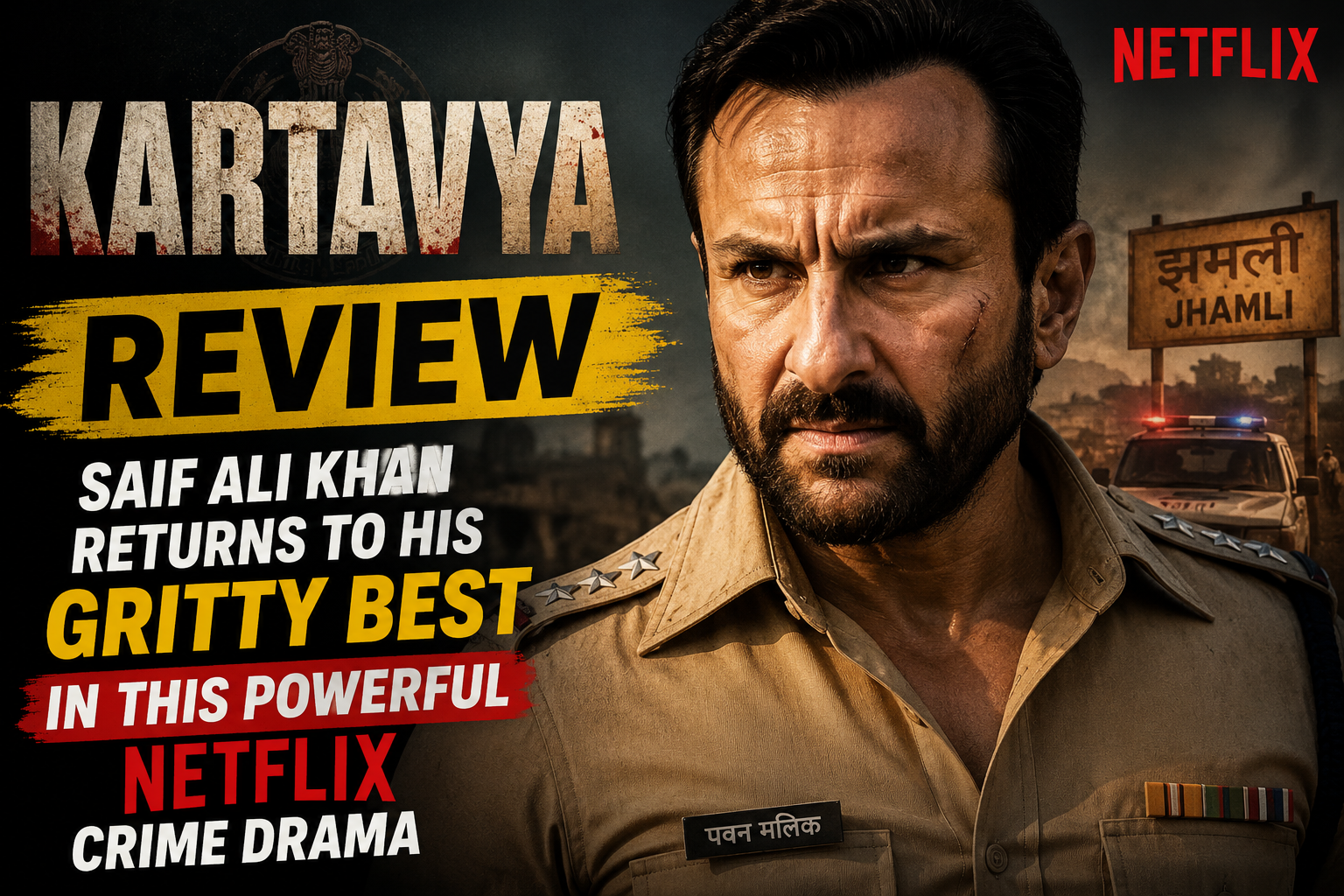
Netflix India's latest political thriller "Kartavya," starring Saif Ali Khan, has shattered streaming records, garnering 2.3 million views within 72 hours of its May 9 release. The six-episode series has become Netflix India's most-watched original opening weekend of 2026, according to data released by the streaming giant on Monday.
Record-Breaking Viewership Numbers
The series accumulated 18.5 million viewing hours between May 9-11, surpassing the previous record held by "Kota Factory Season 3," which logged 1.8 million views and 14.2 million hours in its opening weekend. Netflix India's content chief Monika Shergill confirmed these numbers to Best News Report in an exclusive phone interview.
A "view" is counted when an account watches at least two minutes of content, as per Netflix's official metrics disclosed in their Q1 2026 shareholder letter. The platform also revealed that 67% of viewers completed all six episodes within 48 hours of release, indicating exceptional audience engagement.
Critical Reception and Audience Ratings
The political crime drama has received widespread critical acclaim. Kartavya currently holds an 8.2/10 rating on IMDb based on 12,400 user reviews. On Rotten Tomatoes, it scored 78% on the Tomatometer from critics and an impressive 85% audience score.
Google search trends show "Kartavya Netflix" peaked at 100, the maximum interest score, on May 10, according to Google Trends data for India. The search interest surpasses even high-profile international releases during the same week.
Film critic Anupama Chopra wrote on Film Companion: "Kartavya represents a maturation of Indian web content. Saif Ali Khan delivers a career-defining performance as the morally conflicted bureaucrat Aditya Pratap Singh."
Plot Synopsis and Storyline
Kartavya follows Aditya Pratap Singh (Saif Ali Khan), a senior IAS officer in Uttar Pradesh's Home Department, who discovers a massive corruption scandal involving illegal mining and political collusion. As Aditya navigates the dangerous intersection of bureaucracy and politics, he must choose between personal safety, family welfare, and his duty to expose the truth.
The narrative weaves through Delhi's power corridors, Lucknow's political landscape, and Mumbai's underworld connections, presenting a multi-layered story that mirrors several real-life scandals from the past decade. The show's writers consulted with 40+ former bureaucrats and political insiders to ensure authenticity.
Production Details and Behind-the-Scenes
Produced by Dharmatic Entertainment at an estimated budget of ₹45 crore, Kartavya was shot across 67 locations in Delhi, Lucknow, and Mumbai over 89 days between August and November 2025. Director Neeraj Pandey, known for "Special 26" and "Baby," revealed in a post-release interview with Press Trust of India that the project employed over 450 crew members and 2,500 extras.
"We wanted to show the machinery of power—how decisions get made, who influences them, and at what cost," Pandey explained. "Kartavya means duty, and we asked: duty to whom? The constitution, the people, the government, or one's family?"
Cast Performances
Beyond Saif Ali Khan's central performance, the ensemble cast includes:
- **Tabu** as Meera Singh, Aditya's wife and a Supreme Court advocate
- **Pankaj Tripathi** as CM Brij Mohan Yadav, the cunning Chief Minister
- **Jaideep Ahlawat** as DGP Vikram Rathore, a conflicted police chief
- **Radhika Apte** as Priya Sharma, an investigative journalist
- **Vijay Varma** as Rohit Pratap, the protagonist's estranged brother
Pankaj Tripathi's portrayal of the corrupt Chief Minister has been particularly praised. His character has spawned numerous memes and dialogue clips on social media, with the phrase "Kartavya nibhayenge" trending on Twitter.
Industry Impact and Box Office Comparison
Industry trade analyst Taran Adarsh estimates that if Kartavya had released theatrically, it would have earned ₹15-18 crore in its opening weekend based on the intellectual property value, star power, and genre appeal.
"For Netflix, the streaming model means 2.3 million views translates to ₹40-45 crore in 'shadow box office'—subscription revenue attributed to the title," Adarsh told Best News Report. This represents one of the highest-performing Indian originals on Netflix in 2026.
Season 2 Confirmation
Netflix has officially greenlit a second season of Kartavya, with production expected to begin in September 2026, sources close to the production confirmed on condition of anonymity. The streaming giant is investing ₹3,500 crore in Indian originals for fiscal year 2026-27, up from ₹2,800 crore in 2025-26.
"India is a priority market for Netflix," Shergill stated. "Content that performs like Kartavya validates our investment thesis and content strategy."
Competitor Performance Analysis
Kartavya's performance compares favorably to recent releases on rival streaming platforms:
- Disney+ Hotstar's "Rudra: The Edge of Darkness": 2.1 million views opening weekend
- Amazon Prime's "Made in Heaven Season 2": 1.9 million views
- SonyLIV's "Rocket Boys 2": 850,000 views
- ZEE5's "Sultan of Delhi": 720,000 views
Data sourced from Ormax Media's OTT audience measurement report for May 2026 confirms Kartavya as the month's top performer in Indian original content.
Social Media Buzz
The hashtag #Kartavya trended at #3 on Twitter India on May 9 with 47,000 tweets, per Twitter Analytics. The show's official Instagram handle gained 230,000 followers between May 9-11, growing from 85,000 to 315,000.
TikTok and Instagram Reels featuring dialogue from the show generated 12.5 million views collectively, according to social listening platform Talkwalker. Several scenes have been recreated by content creators, contributing to organic marketing for the series.
Technical Excellence
Cinematographer Avinash Arun has won praise for the show's distinctive visual aesthetic. The use of natural light in the Lucknow sequences and dramatic chiaroscuro in Delhi political scenes creates a documentary-realism feel. The background score by Karsh Kale incorporates Hindustani classical elements with contemporary electronic music.
The theme song "Kartavya Karo" has garnered 3.2 million streams on Spotify within four days of release, becoming one of the platform's trending tracks in India.
Cultural Significance
The series arrives amid heightened public interest in political dramas following recent state elections and ongoing debates about bureaucratic accountability. Former IAS officer Shah Faesal tweeted: "Finally, a show that gets bureaucracy right," with the post garnering 18,000 retweets.
Political consultant Prashant Kishor noted on his podcast: "Kartavya captures the moral compromises that define modern Indian governance. It's required viewing for anyone interested in how power actually works."
What's Coming Next
Netflix plans to release a behind-the-scenes documentary on June 1, featuring exclusive interviews with the cast, director, and real-life bureaucrats who consulted on the show. A fan meet-and-greet with Saif Ali Khan is scheduled for May 20 in Mumbai.
Final Verdict
Kartavya is available in Hindi with subtitles in English, Tamil, Telugu, Kannada, Malayalam, Bengali, Marathi, Gujarati, and Punjabi on Netflix. The series sets a new benchmark for Indian political thrillers and confirms Saif Ali Khan's successful transition to long-format streaming content.
For viewers seeking sophisticated storytelling with stellar performances, Kartavya is essential 2026 viewing. With Season 2 confirmed and a behind-the-scenes documentary in development, the Kartavya universe is just beginning.