The global energy market is heating up—fast. And if you’ve been watching headlines lately, one phrase keeps popping up: brent crude price. It’s not just a number anymore; it’s a signal, a warning, and for many economies, a looming storm.
So what’s really going on? Why are oil prices spiking so sharply, and why are traders suddenly preparing for months—maybe even longer—of disruption?
Let’s break it all down in a way that actually makes sense.
## Oil Prices Surge: What’s Happening Right Now?
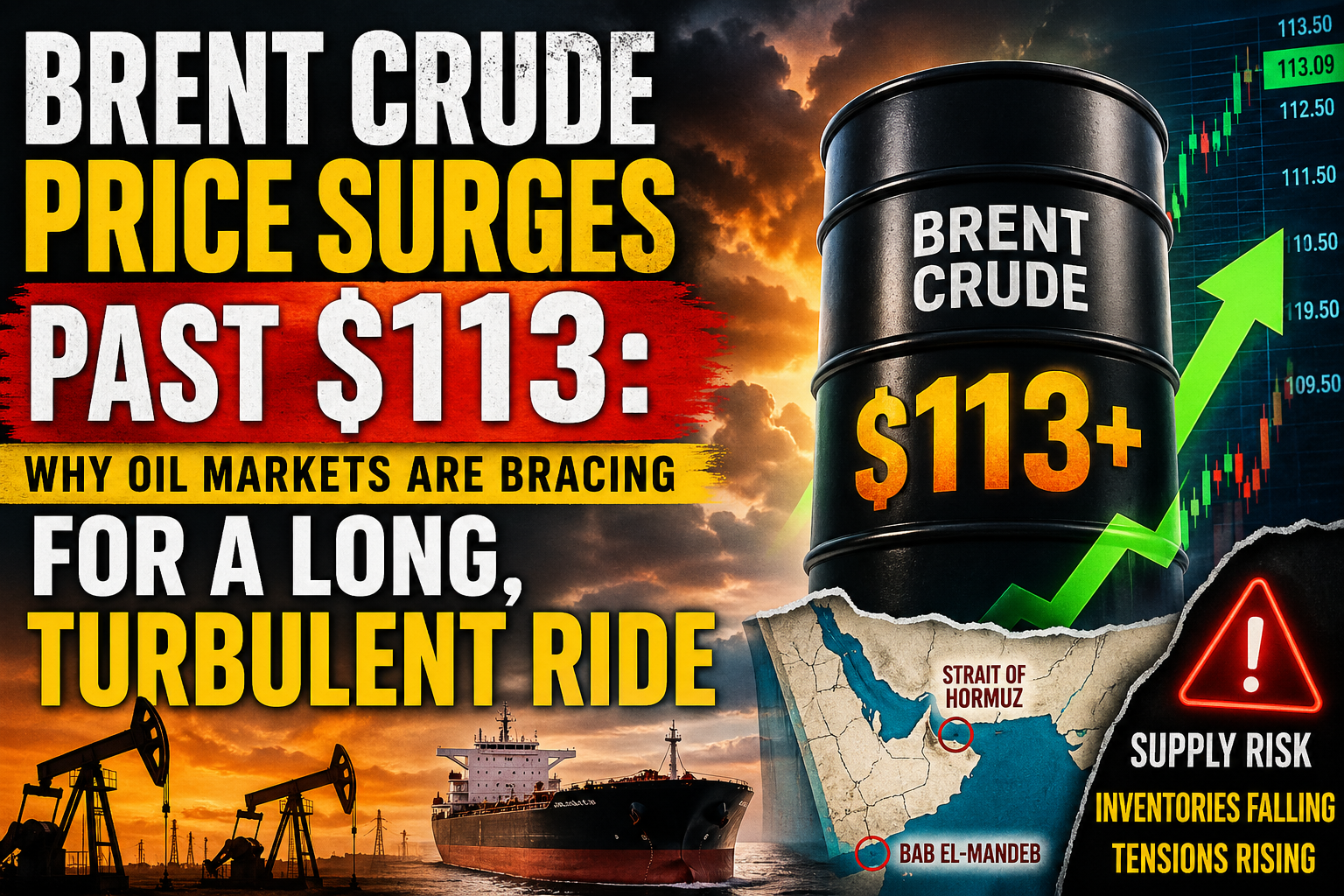
The brent crude price has officially crossed the $113 mark, climbing steadily in early Asian trading sessions. Meanwhile, U.S. benchmark crude—West Texas Intermediate (WTI)—is hovering above $109.
But here’s the real kicker: the expiring Brent contract surged past $121. That’s not just a spike—it’s a red flag.
Why does this matter?
Because when short-term oil contracts rise faster than future ones, it signals one thing loud and clear: immediate supply is tight—very tight.
## The Strait of Hormuz Crisis: The Heart of the Problem
This narrow waterway handles nearly 20% of the world’s oil supply. Now imagine that artery being partially blocked. That’s exactly what’s happening.
Since late February, Iran has effectively restricted non-Iranian vessels from passing through. At the same time, the U.S. has tightened pressure by blocking Iranian-linked ships.
It’s like two giants locking the same door from opposite sides.
The result? Supply chains are choking.
## Why Traders Are Expecting Long-Term Disruption
Here’s where things get serious.
Diplomatic talks to reopen the Strait have failed. No agreement. No progress. Just rising tension.
And when Donald Trump met with oil executives recently, the message was clear:
This isn’t ending anytime soon.
Markets don’t wait for official statements—they react to signals. And this signal was loud:
Prepare for months of instability.
## Inventory Levels Are Falling Fast
While geopolitics grabs headlines, there’s another silent driver behind rising brent crude price—shrinking inventories.
The U.S. Energy Information Administration (EIA) has reported:
- Sharp drops in crude oil stockpiles
- Declining gasoline reserves
- Increased consumption without matching supply
Think of it like a fuel tank slowly draining while the refill truck is stuck in traffic.
Eventually, you run dry.
## The Role of OPEC+: Too Little, Too Late?
The OPEC+ alliance is expected to increase output by around 188,000 barrels per day.
Sounds helpful, right?
Not quite.
In a market losing millions of barrels due to disruptions, this increase is like pouring a glass of water on a forest fire.
It helps—but barely.
## UAE’s Exit: A Crack in the Oil Alliance
In a surprising twist, the United Arab Emirates has announced it will leave OPEC+ starting May 1.
At first glance, this might not shake markets immediately. Why?
Because even if the UAE wants to pump more oil, logistical and infrastructure limits slow things down.
But in the long term?
This could reshape global oil supply dynamics entirely.
## Geopolitics vs Economics: Who’s Winning?
Right now, geopolitics is clearly in the driver’s seat.
Normally, oil prices respond to economic factors like demand, inflation, and growth. But today, it’s all about:
- Military build-ups
- Trade blockades
- Strategic waterways
- Political brinkmanship
In short, the oil market has become a chessboard—and every move matters.
## Could Things Get Worse? The Bab el-Mandeb Threat
If you think the Strait of Hormuz is critical, wait until you hear about the Bab el-Mandeb Strait.
This narrow passage connects the Red Sea to the Gulf of Aden—another major oil route.
If tensions spread and this chokepoint gets disrupted too, we could see:
- Even higher brent crude price spikes
- Severe global supply shortages
- Massive shipping delays
It’s like closing two major highways at once. Chaos is inevitable.
## The Biggest Energy Crisis in History?
According to the International Energy Agency (IEA), this situation could become the largest energy crisis ever recorded.
That’s not just dramatic wording—it reflects reality.
We’re seeing:
- Simultaneous supply disruptions
- Falling reserves
- Rising geopolitical tension
- Weak coordination among producers
Put it all together, and you’ve got a perfect storm.
## What This Means for Everyday People
Let’s bring this closer to home.
Rising brent crude price doesn’t just affect traders—it hits everyone.
You’ll likely notice:
- Higher petrol and diesel prices
- Increased transportation costs
- Rising food prices due to logistics
- Inflation across multiple sectors
It’s like a domino effect—once oil moves, everything else follows.
## Market Outlook: Where Are Oil Prices Headed?
So, what’s next?
If current conditions persist, analysts expect:
- Continued upward pressure on brent crude price
- Increased volatility in global markets
- Potential spikes beyond $120 again
- Strong upside risk if conflict escalates
Unless there’s a sudden diplomatic breakthrough, relief seems unlikely in the short term.
## Is There Any Hope for Stability?
Good question—and the honest answer?
Yes, but it’s complicated.
Stability could return if:
- The Strait of Hormuz reopens
- Diplomatic negotiations succeed
- OPEC+ significantly boosts production
- Global demand slows down
But right now, none of these seem imminent.
## Final Thoughts: A Market on Edge
The oil market today feels like a stretched rubber band—pulled tight and ready to snap.
The brent crude price surge isn’t just about supply and demand anymore. It’s about power, politics, and global uncertainty.
And until those tensions ease, one thing is clear:
We’re in for a volatile ride.
## Conclusion
In a world deeply dependent on energy, the sharp rise in brent crude price serves as a powerful reminder of how fragile global systems can be. From geopolitical conflicts to shrinking inventories, multiple forces are converging to reshape the oil landscape. While short-term solutions appear limited, the long-term implications could redefine energy strategies worldwide.
## Final Conclusion
At its core, this crisis isn’t just about oil—it’s about control, access, and resilience. Whether you’re an investor, policymaker, or everyday consumer, the ripple effects of rising brent crude price are impossible to ignore. The coming months will test not just markets, but the world’s ability to adapt under pressure.