
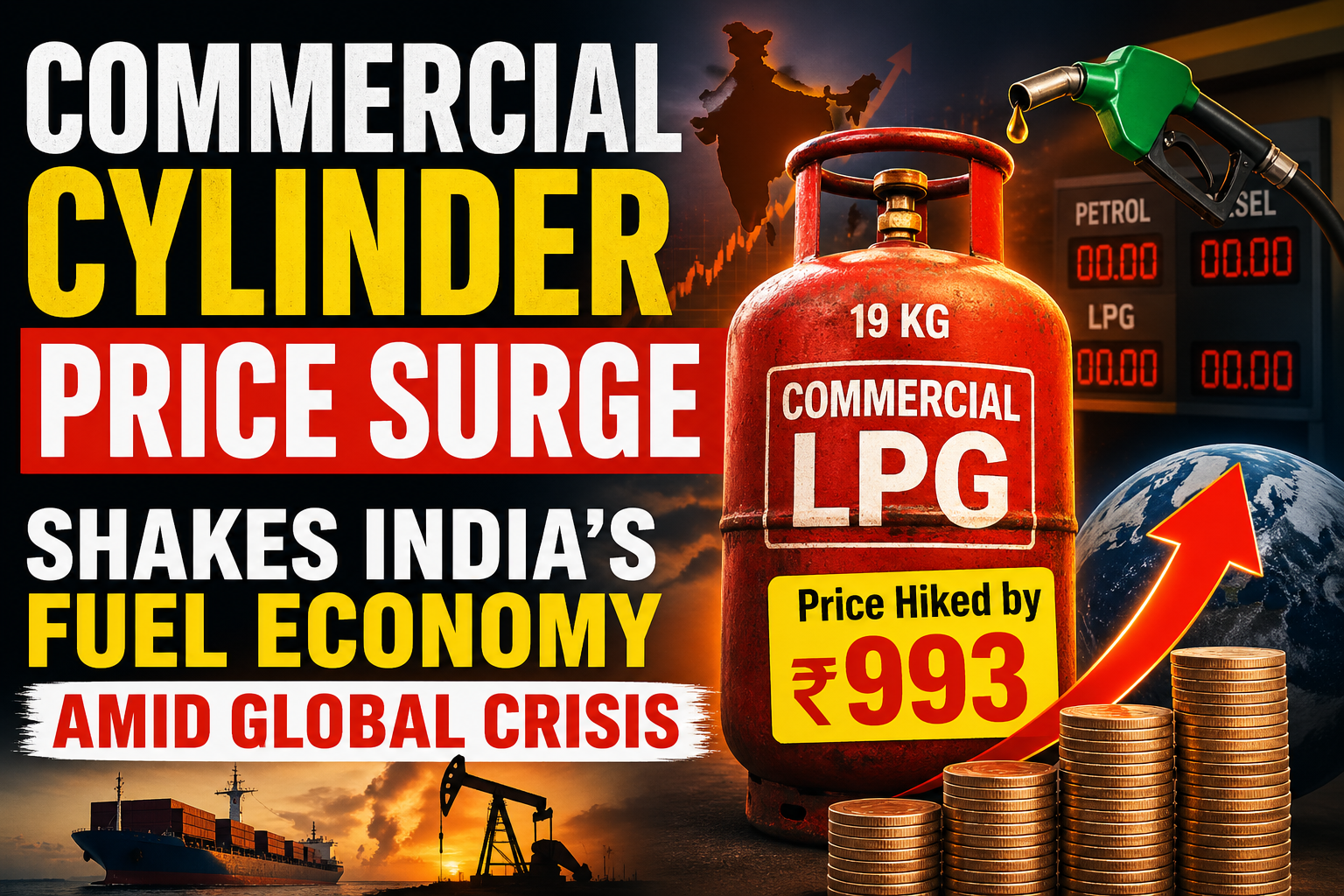
If you thought fuel prices were finally stabilizing, think again. Just when expectations were building around a possible price hike across all fuel categories, the government made a surprising move. While keeping domestic LPG, petrol, and diesel prices unchanged, it delivered a sharp blow to businesses by significantly increasing the commercial cylinder price.
This sudden ₹993 hike in commercial LPG cylinders has sent ripples across industries—especially restaurants, hotels, and small food vendors. But what’s really behind this decision? And more importantly, how will it affect you?
Let’s break it down.
What Exactly Has Changed in Commercial Cylinder Price?
The latest revision has pushed the commercial cylinder price (19 kg LPG cylinder) to unprecedented levels.
- In Delhi, prices jumped from ₹2,078.50 to ₹3,071.50
- In Mumbai, rates surged from ₹2,031 to ₹3,024
That’s not just a minor increase—it’s a massive leap that businesses cannot ignore.
What makes it even more concerning is that this is the third hike since late February. First came a ₹144 increase in March, then nearly ₹200 in April, and now this massive jump.
It’s like adding fuel to the fire—literally.
Why Is the Commercial Cylinder Price Rising?
The answer lies thousands of kilometers away—in geopolitical tensions.
The ongoing crisis linked to the Iran conflict has disrupted global oil supply chains. Crude oil prices have surged beyond $120 per barrel, making imports significantly more expensive for India.
Now, here’s the catch: while global prices have shot up, domestic retail fuel prices haven’t been adjusted accordingly. So, where does the pressure go?
Straight onto commercial LPG.
Why Domestic LPG Prices Remain Unchanged
Interestingly, domestic LPG cylinders (14.2 kg) remain untouched—for now.
Here’s a quick snapshot:
- Delhi: ₹913
- Mumbai: ₹912.50
- Kolkata: ₹939
- Chennai: ₹928.50
This decision seems politically and socially motivated. Raising household gas prices could directly impact millions of families and trigger inflation concerns.
So instead, the burden has been shifted to businesses using commercial cylinders.
Restaurants and Small Businesses Take the Hit
Let’s be honest—restaurants run on gas.
From street-side vendors to five-star kitchens, LPG is the backbone of cooking operations. With the commercial cylinder price skyrocketing, businesses are left with two choices:
- Absorb the losses (unlikely for long)
- Pass the cost to customers
And guess what most will choose?
Yes—you’ll likely see higher menu prices, increased delivery charges, and smaller portion sizes.
Will Eating Out Become More Expensive?
Short answer: Yes.
Long answer: Absolutely.
When fuel costs rise, everything from cooking to transportation becomes expensive. Restaurants will gradually adjust pricing to maintain margins.
So that ₹200 meal you love? It might soon cost ₹230 or more.
It’s a domino effect—and consumers are at the end of the chain.
Petrol and Diesel Prices Stay Frozen—But for How Long?
In a surprising move, petrol and diesel prices remain unchanged despite rising crude oil costs.
Why?
Because increasing these would immediately spike inflation across sectors—transport, agriculture, and logistics.
However, this decision comes at a cost.
Oil Companies Are Bleeding—Here’s Why
India’s major oil marketing companies—Indian Oil Corporation, Bharat Petroleum, and Hindustan Petroleum—are currently under immense financial stress.
They are:
- Buying crude oil at high global prices
- Selling fuel domestically at unchanged rates
This mismatch has reportedly caused losses of nearly ₹16,000 crore daily.
Think about that for a second.
That’s like running a business where your costs double but your selling price stays the same.
Not sustainable, right?
Government Walking a Tightrope
The government is stuck in a classic dilemma:
- Raise fuel prices → risk inflation and public backlash
- Keep prices steady → burden oil companies
It’s like trying to balance on a thin rope while carrying weights on both sides.
So far, the strategy seems to be selective increases—targeting sectors like commercial LPG while protecting households.
Selective Price Adjustments: A Strategic Move
Instead of a blanket hike, authorities have opted for a targeted approach:
- Premium petrol: Increased
- Bulk diesel: Increased
- ATF (international flights): Increased
- Commercial LPG: Increased
- Domestic LPG: No change
- Retail petrol/diesel: No change
This selective pricing helps control inflation while partially offsetting losses.
But it’s only a temporary fix.
New LPG Booking Rules from May 1
Alongside the price hike, new LPG rules have also been introduced.
Here’s what’s changed:
- Booking gap increased from 21 days to 25 days in cities
- Rural areas now have up to 45-day intervals
- Early bookings will be automatically blocked
This move aims to regulate supply and prevent misuse.
OTP-Based Delivery System Now Mandatory
Gone are the days when you could simply show a receipt and get your cylinder.
Now, a Delivery Authentication Code (DAC) system is mandatory.
Here’s how it works:
- Book a cylinder
- Receive OTP on registered mobile
- Share OTP with delivery agent
No OTP? No cylinder.
This digital shift improves transparency and reduces fraud—but may inconvenience some users initially.
Impact on Inflation and Economic Growth
Rising commercial cylinder price doesn’t just affect restaurants—it trickles into the broader economy.
Higher operational costs → Higher product prices → Reduced consumer spending
And that slows down economic growth.
Add to that existing subsidy burdens on LPG and fertilizers, and the government’s financial strain becomes evident.
Could Petrol and Diesel Prices Rise Next?
Let’s be real—this freeze can’t last forever.
If crude oil prices remain high, pressure will eventually force a revision in petrol and diesel rates.
The only question is: when?
And how much?
What Should Consumers Expect Going Forward?
Here’s what you should prepare for:
- Gradual increase in food prices
- Higher delivery and service charges
- Possible fuel price hike in coming months
- Stricter LPG usage regulations
In short, everyday expenses may creep upward.
Conclusion: A Temporary Relief with Long-Term Consequences
The decision to keep domestic LPG, petrol, and diesel prices unchanged may feel like a relief today. But the sharp rise in commercial cylinder price tells a deeper story.
It’s a balancing act—protecting consumers while managing economic realities.
But like a pressure cooker, something has to give eventually.
Final Thoughts: Are We Delaying the Inevitable?
Let’s face it—this isn’t just about gas cylinders.
It’s about how global events shape local economies.
The Iran conflict may seem distant, but its impact is sitting right in your kitchen and your favorite restaurant.
So the next time your food bill feels higher, remember—it’s not just inflation.
It’s geopolitics on your plate.