
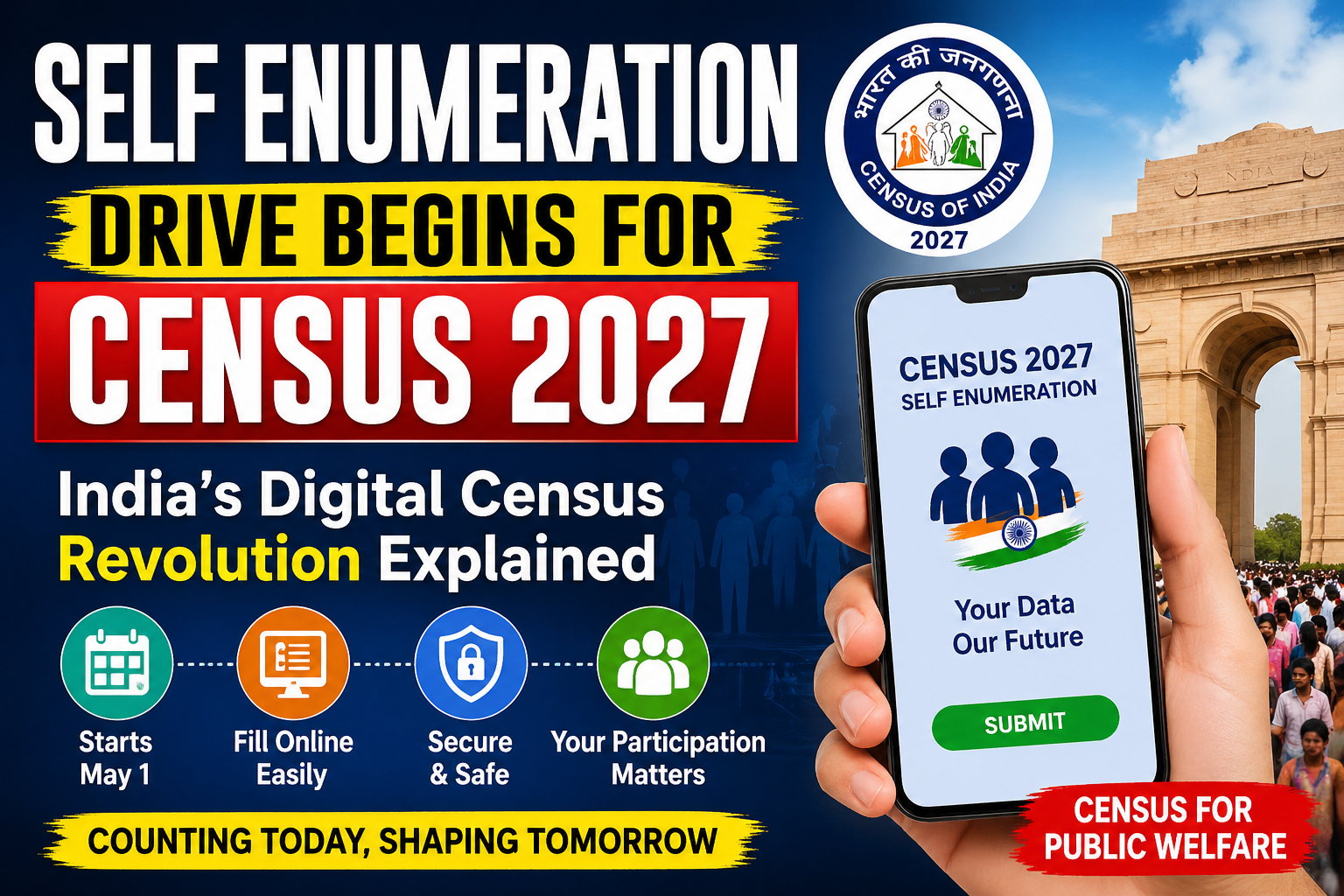
India is stepping into a new era of data collection, and it’s not just another bureaucratic exercise—it’s a digital revolution. The upcoming Census 2027 is set to redefine how citizens interact with governance, starting with a major push toward self enumeration. Beginning May 1, cities like Nagpur are leading the way with a tech-first approach that aims to make the process faster, smarter, and more citizen-friendly.
But what does this really mean for you? Why is self enumeration suddenly such a big deal? And how will it shape the future of policymaking in India? Let’s break it all down in a way that actually makes sense.
What Is Self Enumeration and Why It Matters
Imagine filing your taxes online instead of waiting in long queues. That’s exactly what self enumeration feels like—but for national data collection. Instead of relying solely on government officials to gather information, citizens can now input their own details directly through a secure portal.
This isn’t just about convenience. It’s about accuracy, speed, and empowerment. When people fill in their own data, the chances of errors drop significantly. Plus, it cuts down on time and manpower, making the entire process more efficient.
In the context of Census of India, this shift is monumental. It reflects a broader move toward digital governance, where citizens actively participate rather than passively comply.
Census 2027: A Digital-First Initiative
The census of India 2027 is not your typical census. It’s designed to be digital at its core. The government has introduced an online self-enumeration portal that supports multiple languages, ensuring accessibility for a diverse population.
From smartphones to desktops, the system is built to work across devices. It’s like having a government office in your pocket—available anytime, anywhere.
The theme “Census for Public Welfare” highlights the bigger picture. This isn’t just about counting people; it’s about understanding lives, needs, and opportunities.
Two Phases of the Enumeration Process
The census will roll out in two distinct phases, each with its own purpose.
Phase 1: Self Enumeration (May 1 – May 15)
This is where citizens take the lead. During this window, households can log in to the official portal and complete their details independently.
Once submitted, the head of the family receives an 11-digit Self Enumeration ID. Think of it as a digital acknowledgment—a proof that your data has been recorded.
Phase 2: Door-to-Door Verification (May 16 – June 14)
After the self-enumeration window closes, trained enumerators step in. They visit households to verify and supplement the data collected.
It’s like a double-check system—ensuring that no detail slips through the cracks.
The Role of Enumerators and Supervisors
Even with a digital-first approach, human involvement remains crucial. Thousands of enumerators and supervisors have been deployed to ensure smooth execution.
Each enumerator is responsible for collecting data from hundreds of residents. That’s no small task. It requires precision, patience, and a deep understanding of the process.
Supervisors, on the other hand, act as quality controllers. They ensure that the data collected is accurate and complete.
What Information Will Be Collected?
You might be wondering—what exactly are you expected to share?
The census questionnaire includes 33 questions covering a wide range of topics:
- Housing structure and materials
- Ownership status
- Number of rooms
- Family size and composition
- Social category
- Access to basic amenities
These amenities include essentials like drinking water, electricity, toilets, drainage systems, kitchens, and cooking fuel.
It’s like creating a detailed snapshot of every household in the country. This data becomes the backbone of policy decisions.
Why Self Enumeration Is a Game-Changer
Let’s be honest—traditional census methods can feel outdated. Paper forms, manual entries, and endless verification cycles often slow things down.
Self enumeration flips the script.
It’s faster.
It’s more accurate.
And it puts control in the hands of citizens.
Think of it as upgrading from a handwritten letter to instant messaging. The difference is night and day.
Language Accessibility and Inclusivity
India is a land of languages, and the census reflects that diversity. The self-enumeration platform supports multiple languages, making it easier for people from different regions to participate.
This inclusivity ensures that no one is left behind. Whether you’re comfortable in Hindi, English, or any regional language, the system has you covered.
Ensuring Data Accuracy and Accountability
Accuracy is everything in a census. Even a small error can lead to flawed policies.
That’s why strict measures are in place. Officials have emphasized that any negligence in data collection will not be tolerated.
Enumerators are trained to use digital tools effectively, ensuring that the information recorded is precise and reliable.
It’s like building a house—you need a strong foundation. In this case, accurate data is that foundation.
How Census Data Impacts Your Daily Life
You might not realize it, but census data influences almost every aspect of your life.
From infrastructure development to healthcare planning, education policies to urban development—everything depends on accurate population data.
For example:
- More schools are built where there are more children
- Healthcare facilities are expanded based on population needs
- Roads and public transport systems are planned using demographic data
So when you participate in self enumeration, you’re not just filling out a form—you’re shaping the future.
Nagpur as a Model City for Census 2027
Nagpur is among the first cities to implement this digital-first approach. With thousands of enumerators and supervisors deployed, the city is setting an example for others to follow.
The scale of the operation is massive, but it’s also a test case. If successful, it could pave the way for similar initiatives across the country.
Challenges and Opportunities Ahead
No system is perfect, and this one is no exception.
Some challenges include:
- Digital literacy gaps
- Internet accessibility issues
- Data privacy concerns
But with challenges come opportunities. The push for self enumeration could accelerate digital adoption across India.
It’s like a ripple effect—one change leading to many others.
Why You Should Participate in Self Enumeration
Still thinking about skipping it? Here’s why you shouldn’t.
Participation ensures that your household is counted accurately. It gives you a voice in national planning.
Plus, it makes the job easier for enumerators, reducing the need for repeated visits.
In short, it’s a win-win situation.
The Bigger Picture: Digital India in Action
The janganana 2027 initiative is more than just a census—it’s a reflection of India’s digital ambitions.
From online services to smart governance, the country is moving toward a future where technology plays a central role.
Self enumeration is a key piece of that puzzle.
Conclusion: A New Chapter in India’s Census Journey
The launch of self enumeration marks a turning point in how India conducts its census. It’s faster, smarter, and more inclusive than ever before.
By embracing digital tools, the census of India 2027 is not just collecting data—it’s building a roadmap for the future.
So when May 1 arrives, don’t think of it as just another task. Think of it as your chance to contribute to something bigger.
Because in the end, a census isn’t just about numbers—it’s about people, stories, and possibilities.
Final Thoughts
If data is the new oil, then the census is the refinery. And self enumeration? That’s the pipeline bringing everything together.
The success of this initiative depends on participation. The more people engage, the better the outcomes.
So take a few minutes, log in, and complete your details. It might seem small, but its impact is enormous.
After all, the future isn’t built by governments alone—it’s built by people like you.