India’s relationship with gold is emotional, cultural, and deeply financial. From weddings and festivals to investments and emergency savings, gold has always been treated like a trusted family member in Indian households. But now, the government is sending a strong message: slow down on buying gold.
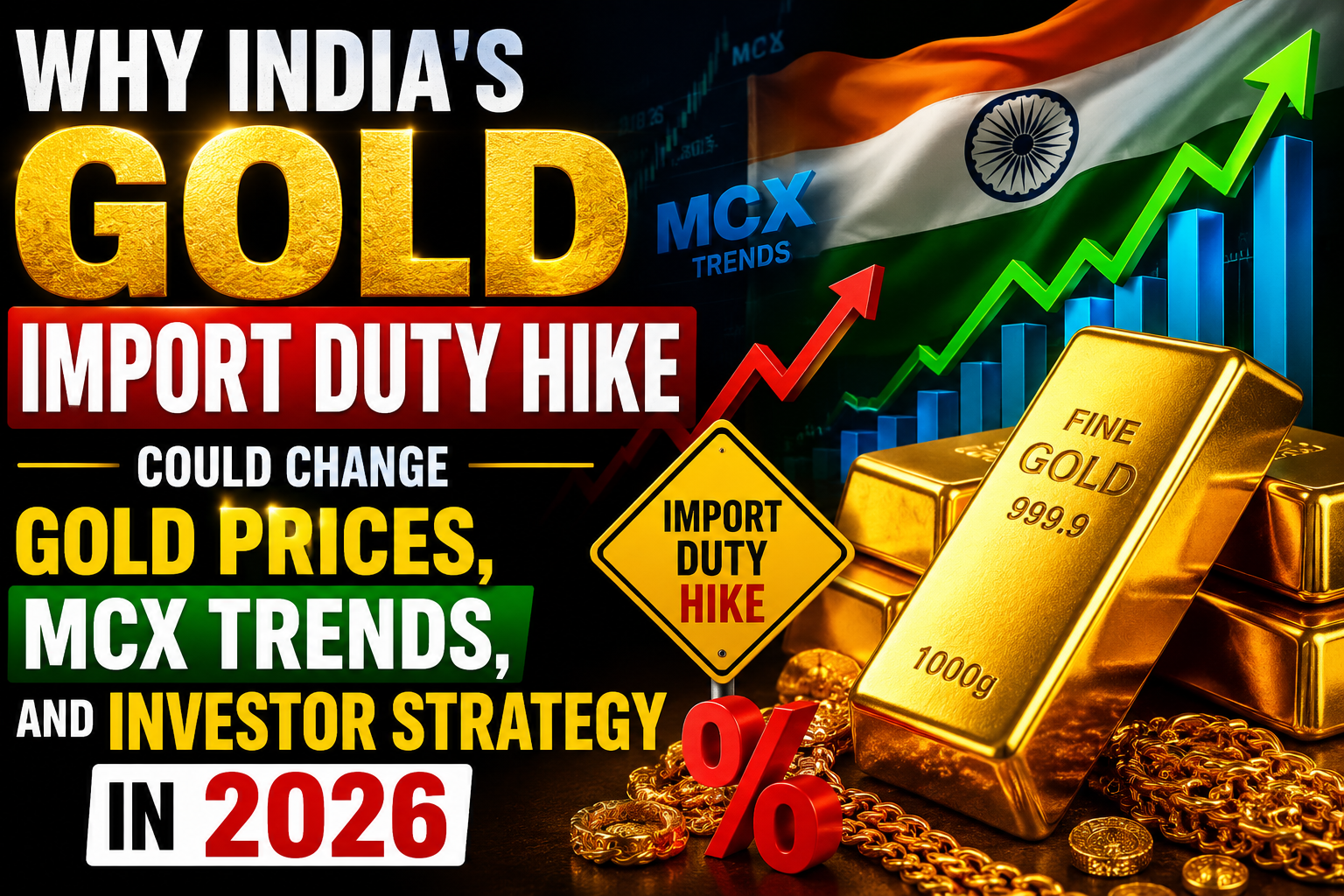
In a major economic move, the Indian government has sharply increased the import duty on gold and silver. The effective duty has jumped from 6% to 15%, making gold significantly more expensive almost overnight. The decision came shortly after Prime Minister Narendra Modi appealed to citizens to avoid purchasing gold for at least a year.
But why such a dramatic move? Is this simply another tax increase, or is there a much bigger economic story behind it?
Let’s break it all down in simple language and understand how the new import duty on gold could affect your wallet, India’s economy, jewellery prices, investors, and even the black market.
India’s Big Move: Gold Import Duty Raised to 15%
The Ministry of Finance officially revised the duty structure on gold and silver under Customs Notification No. 16/2026. Starting May 13, imported gold now attracts:
| Component | Earlier | Now |
|---|---|---|
| Basic Customs Duty (BCD) | 5% | 10% |
| Agriculture Infrastructure and Development Cess (AIDC) | 1% | 5% |
| Effective Import Duty | 6% | 15% |
That’s not a minor adjustment. It’s a huge leap.
The government has effectively made imported gold much more expensive in an attempt to reduce consumption and protect India’s foreign exchange reserves.
And honestly, this move wasn’t random.
Why Did India Raise the Import Duty on Gold?
The answer lies in one simple word: dollars.
India imports nearly all of the gold consumed domestically. Unlike countries with large gold mines, India depends heavily on foreign suppliers. Every ounce of imported gold must be paid for in US dollars.
And that’s where the trouble begins.
India’s Forex Reserves Are Under Pressure
Global tensions, especially the ongoing Iran conflict and rising crude oil prices, have started putting pressure on India’s economy.
India’s foreign exchange reserves — the country’s emergency savings in foreign currencies — have slipped from recent highs. At the same time, oil prices remain expensive, and India imports around 88% of its crude oil needs.
Now think about this:
- India spent nearly $71.98 billion on gold imports in 2025-26
- Gold accounted for around 9-10% of India’s total import bill
- All payments were made in US dollars
That’s a massive outflow of foreign currency.
So the government decided to hit the brakes.
By increasing the import duty on gold, policymakers hope fewer people will buy imported gold, reducing dollar outflow and easing pressure on forex reserves.
It’s almost like plugging a leak in a water tank before the situation gets worse.
How the Iran War Triggered Economic Concerns
Geopolitical tensions in the Middle East have become one of the biggest reasons behind this policy shift.
Whenever conflict erupts in oil-producing regions like Iran, crude oil prices usually shoot higher. Since India imports most of its oil, expensive crude means more dollars flowing out of the country.
At the same time, investors globally rush toward safe-haven assets like gold during uncertain times. That increases gold demand and prices further.
So India was facing a double punch:
- Higher oil imports
- Higher gold imports
The government clearly saw danger ahead.
The International Monetary Fund (IMF) has also warned that India’s current account deficit (CAD) could widen if the conflict continues for a longer period.
That’s why the hike in gold import duty in India is being seen as a preventive economic strategy rather than just taxation.
How Much More Expensive Will Gold Become?
The impact is immediate.
As soon as the new import duty on gold in India came into effect, retail gold prices started moving higher.
At the time of reporting:
- 24K gold price in India hovered near Rs 15,475 per gram
- Silver prices were trading between Rs 278,000 and Rs 290,000 per kg
Now let’s see how the duty changes the final cost.
| Scenario | Duty Rate | Duty Amount on Rs 1,54,750 | Final Landed Cost |
|---|---|---|---|
| Earlier System | 6% | Rs 9,285 | Rs 1,64,035 |
| New System | 15% | Rs 23,212 | Rs 1,77,962 |
And remember — this calculation does not include:
- 3% GST
- Making charges
- Jeweller profit margins
So actual jewellery prices will rise even further.
In simple words, buying gold jewellery is about to feel much heavier on the pocket.
What Happens to Gold Prices in India Now?
The new gold duty structure will likely push domestic prices even higher in the coming months.
Why?
Because importers and jewellers will simply pass the additional costs on to consumers.
This means:
- Wedding jewellery becomes costlier
- Festival purchases may reduce
- Investment demand could slow
- Gold coins and bars may see weaker sales
The impact could be particularly strong during festive seasons like Diwali and wedding months, where gold demand traditionally spikes.
Will Investors Shift Away From Physical Gold?
Probably yes.
Interestingly, many investors had already started moving toward digital alternatives before this duty hike.
According to recent trends highlighted by the World Gold Council, Indian investors have increasingly shown interest in:
- Gold ETFs
- Digital gold
- Sovereign Gold Bonds
- MCX gold trading
Now, with higher physical gold prices, this trend may accelerate further.
Instead of buying heavy jewellery or gold bars, investors may prefer paper-based assets linked to gold prices.
That’s because digital options avoid several physical costs like:
- Storage
- Making charges
- High import-linked pricing
Searches related to mcx gold, gold mcx, and gold mcx price have already been rising sharply as traders look for alternative exposure.
Silver Prices Could Also Rise Sharply
The duty hike wasn’t limited to gold alone.
Silver imports are also affected, which means mcx silver, mcx silver price, and today silver rate may witness higher volatility.
Silver has become increasingly popular among:
- Retail investors
- Industrial buyers
- Small jewellery manufacturers
Higher import costs could therefore impact both investment demand and industrial usage.
In the short term, consumers should expect stronger fluctuations in silver rate today across Indian markets.
Why the Government Wants Indians to Buy Less Gold
This policy is not only about economics. It’s also about behaviour.
The government appears to be trying a two-step strategy:
- Moral persuasion
- Financial discouragement
First came the Prime Minister’s appeal asking citizens to avoid buying gold temporarily. Then came the sharp increase in the gold import duty hike.
The message is crystal clear:
“India needs to save dollars right now.”
Gold is considered a non-essential import during economic stress because it does not directly contribute to productive economic growth.
Unlike machinery, oil, or technology imports, gold mostly sits in lockers, bank vaults, or jewellery boxes.
From the government’s perspective, reducing gold imports helps prioritize essential sectors.
How This Helps the Indian Economy
The government believes the higher import duty on gold can provide several economic benefits.
1. Protecting Forex Reserves
Lower gold imports mean fewer dollars leaving India.
Even a 30-40% decline in gold imports could potentially save India billions annually.
2. Supporting the Indian Rupee
Reduced dollar outflow can strengthen the rupee against foreign currencies.
A stable rupee also helps control imported inflation.
3. Narrowing the Current Account Deficit
India’s current account deficit widens when imports significantly exceed exports.
Reducing gold imports can help narrow this gap.
4. Encouraging Recycling
The government also revised concessional duty rates for recycled precious metal categories like:
- Spent catalysts
- Precious metal ash
- Recovery inputs
This suggests India wants to encourage domestic recycling rather than fresh imports.
In simple terms, the government is saying:
“Reuse old gold instead of importing new gold.”
Could Gold Smuggling Return Again?
This is one of the biggest concerns in the market.
Whenever the gap between global gold prices and Indian gold prices widens because of taxes, smuggling tends to rise.
History has shown this repeatedly.
After import duties were reduced in 2024, illegal gold routes had slowed considerably. But now, with the duty jumping to 15%, many bullion traders fear the underground market may return.
Potential risks include:
- Smuggling through neighbouring countries
- Illegal cash transactions
- Growth in unregulated gold networks
Industry groups, including the India Bullion and Jewellers Association, have already warned about these dangers.
It becomes a classic cat-and-mouse game between smugglers and enforcement agencies like Customs and the Directorate of Revenue Intelligence (DRI).
Bullion Traders and Jewellers Face Immediate Pain
For jewellers and bullion traders, this policy could create serious short-term business pressure.
Many expect:
- Lower customer footfall
- Reduced festive demand
- Higher inventory costs
- Working capital stress
Even jewellery findings and components are now taxed at higher rates between 5% and 5.4%.
Small jewellers may feel the biggest impact because higher gold prices directly affect sales volumes.
Still, some trader associations have publicly supported the government’s stance, calling it necessary for the national economy.
That has created a split inside the industry:
- Economic nationalism versus business survival
What Consumers Should Expect Next
If you’re planning to buy gold soon, here’s what may happen over the coming months.
Jewellery Purchases May Be Delayed
Families could postpone large wedding purchases until prices stabilize.
Exchange Schemes May Become Popular
Consumers may increasingly exchange old jewellery for new designs to reduce cash outflow.
Digital Gold Could Gain Momentum
Apps and investment platforms offering digital gold may see stronger demand.
MCX Trading Interest Could Rise
Search trends for mcx gold, gold mcx, and mcx silver are expected to remain strong as traders look for exposure without physical delivery.
Is the Gold Import Duty Hike Temporary or Long-Term?
That’s the million-dollar question.
If global tensions ease and forex reserves recover, the government may eventually reconsider the current structure.
However, if oil prices stay high and geopolitical instability continues, the elevated gold import duty in India could remain for a long time.
Much will depend on:
- Crude oil prices
- Dollar strength
- India’s forex reserve position
- Global economic uncertainty
- Domestic gold demand
Why This Policy Matters Beyond Gold
This decision reflects a broader economic philosophy.
India is trying to reduce dependence on non-essential imports and preserve financial stability during uncertain global times.
Think of it like a household budget.
If income becomes uncertain, families usually cut luxury spending first. Governments behave similarly during economic stress.
Gold, despite its emotional importance, has now become part of that equation.
Conclusion
The sharp rise in the import duty on gold is much more than a routine tax increase. It is a strategic economic move designed to protect India’s forex reserves, reduce unnecessary dollar outflow, and stabilize the broader economy during a period of global uncertainty.
Yes, the immediate impact will hurt buyers, jewellers, and bullion traders. Gold jewellery will become more expensive, investment patterns may shift, and concerns about smuggling could return.
But from the government’s perspective, the decision is about prioritizing economic stability over luxury consumption.
For consumers, this may be the beginning of a major shift toward digital gold, ETFs, recycling, and smarter investment strategies.
One thing is certain: India’s gold story is entering a completely new chapter.