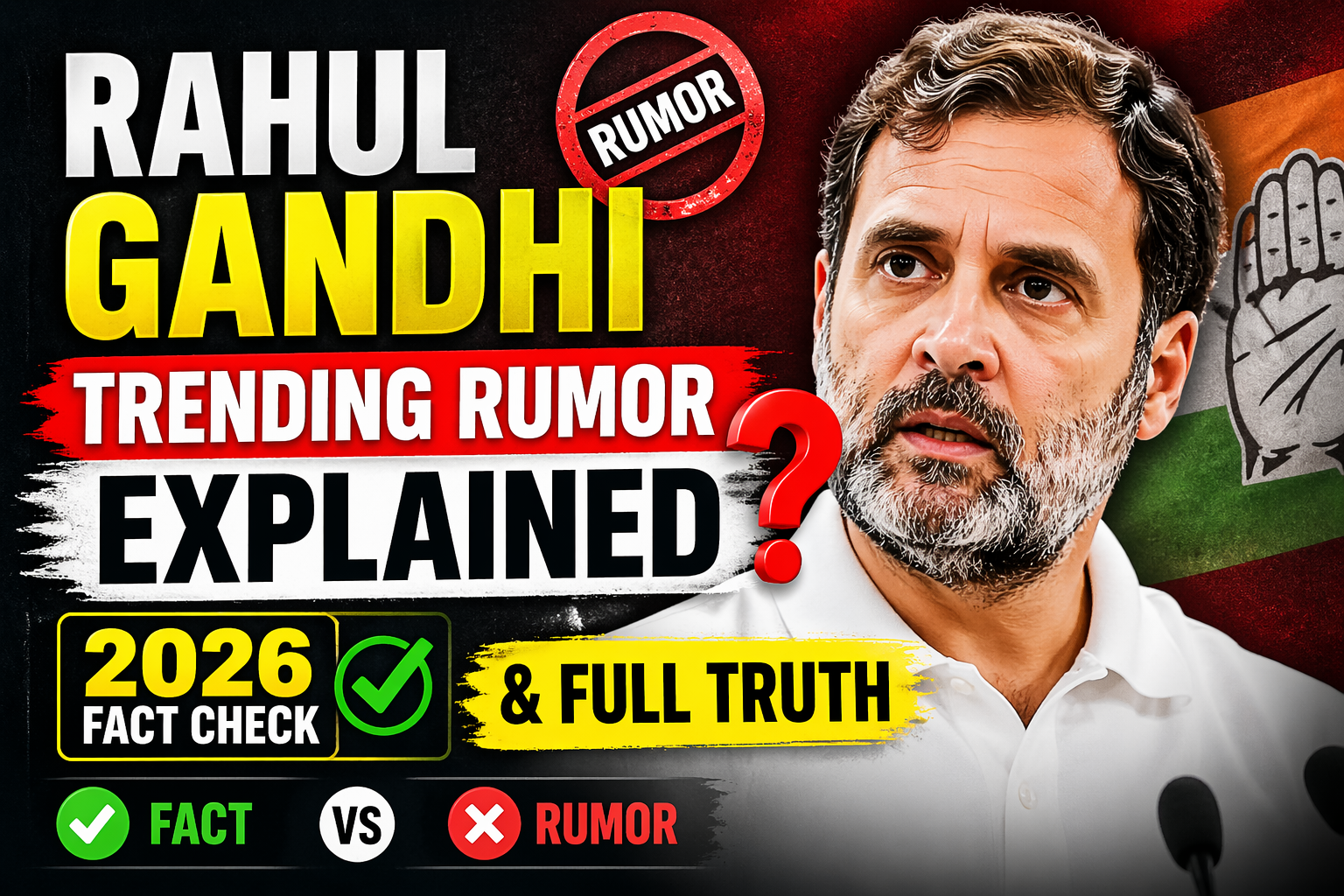
In today’s fast-moving digital world, rumors can spread faster than facts—especially when they involve high-profile political figures like Rahul Gandhi. Over the past few days, a new wave of viral claims and trending searches has once again pushed his name into the spotlight Rahul Gandhi Trending Rumor.
🔍 What Is the Trending Rumor About Rahul Gandhi?
The current buzz around Rahul Gandhi stems from viral social media posts and misleading headlines circulating across platforms like Twitter, Facebook, and YouTube.
These rumors typically fall into a few common categories:
- Claims about his health or well-being
- Misleading statements suggesting political decisions or resignations
- Edited or out-of-context videos spreading confusion
- Sensational headlines designed purely for clicks
However, it’s important to state upfront:
👉 There is no verified evidence supporting any serious negative claims currently circulating.
🧠 Why Do Such Rumors Spread So Fast?
To understand why Rahul Gandhi trends frequently with rumors, you need to look at how modern information ecosystems work.
1. Political Visibility
As a senior leader of the Indian National Congress, Rahul Gandhi is constantly in the public eye. Any statement, appearance, or absence can quickly become a topic of speculation.
2. Social Media Amplification
Platforms prioritize engagement. Content that is shocking, emotional, or controversial spreads faster—regardless of accuracy.
3. Search Engine Trends
When people start searching things like “Is Rahul Gandhi…”, it creates a feedback loop. Platforms like Google detect rising interest and push related content higher, even if it’s based on rumors.
4. Clickbait Economy
Many websites and creators use exaggerated or misleading titles to drive traffic. This often leads to confusion between fact and fiction.
📊 What Do Verified Sources Say?
When analyzing any rumor, the most important step is to check credible and verified sources.
As of now:
- There are no confirmed reports from reputable news organizations indicating any serious issue related to Rahul Gandhi
- His recent public appearances and political activity continue as expected
- No official statements suggest any drastic development
👉 This strongly indicates that the viral rumors are misleading or exaggerated.
🎯 Common Types of Misleading Content
Let’s look at the most common formats in which these rumors spread:
❌ Edited Videos
Short clips taken out of context can completely change the meaning of a statement.
❌ Fake Headlines
Headlines designed to shock:
“Rahul Gandhi SHOCKING NEWS…”
But when you read the article, there’s little or no substance.
❌ Old News Recycled
Sometimes, older events are reshared as if they are happening now.
❌ AI-Generated Content
With the rise of AI, fake images, videos, and even voice clips are becoming more common.
🧾 How to Fact-Check Viral Claims
If you come across a trending rumor, here’s how you can verify it:
✔️ Check Trusted News Sources
Look at established media outlets, not random blogs or unknown websites.
✔️ Look for Official Statements
Public figures or their offices usually respond quickly to major rumors.
✔️ Verify Dates
Many rumors are based on outdated information.
✔️ Cross-Check Multiple Sources
If only one source is reporting something shocking, it’s likely unreliable.
📉 Impact of Fake Rumors on Public Figures
Rumors don’t just confuse audiences—they also have broader consequences:
1. Public Misinformation
People may form opinions based on false or incomplete information.
2. Reputation Damage
Even unverified claims can affect how a public figure is perceived.
3. Political Polarization
In a country like India, misinformation can deepen divisions.
🌐 Why Rahul Gandhi Trends Frequently
There are specific reasons why Rahul Gandhi often appears in trending searches:
- He is a key opposition leader in India
- His speeches and campaigns often generate strong reactions
- Political discussions naturally attract attention and debate
- Supporters and critics both amplify content about him
This combination makes him a frequent target for both genuine news coverage and misleading rumors.
📱 Role of Social Media Platforms
Platforms like Twitter and Facebook play a huge role in rumor spread.
Positive Side:
- Real-time updates
- Direct communication from leaders Rahul Gandhi Trending Rumor
Negative Side:
- Rapid spread of misinformation
- Lack of verification before sharing
- Algorithm-driven amplification
🚨 The Psychology Behind Viral Rumors
Why do people believe and share rumors so easily?
🔹 Emotional Trigger
Shocking or surprising content gets more attention.
🔹 Confirmation Bias
People believe information that aligns with their existing views.
🔹 Urgency
“Breaking news” creates pressure to share quickly without verifying.
🧩 Fact vs Rumor: Final Verdict
Let’s summarize clearly:
- ❌ Viral claims about Rahul Gandhi are not supported by verified evidence
- ✅ No confirmed reports indicate any major issue
- ⚠️ Most trending content is misleading, exaggerated, or taken out of context
👉 Conclusion: The current trend is driven more by internet speculation than factual developments.
💡 How You Should Approach Such News
Before believing or sharing any trending claim:
- Pause and verify
- Check reliable sources
- Avoid spreading unverified information
This not only helps you stay informed but also contributes to a healthier digital environment.
🏁 Final Thoughts
The case of Rahul Gandhi trending due to rumors is a perfect example of how modern information flows work in 2026.
In a world where speed often beats accuracy, the responsibility shifts to readers and creators alike to prioritize truth over virality.
👉 The best strategy—for both readers and bloggers—is simple:
Focus on facts, not noise.