
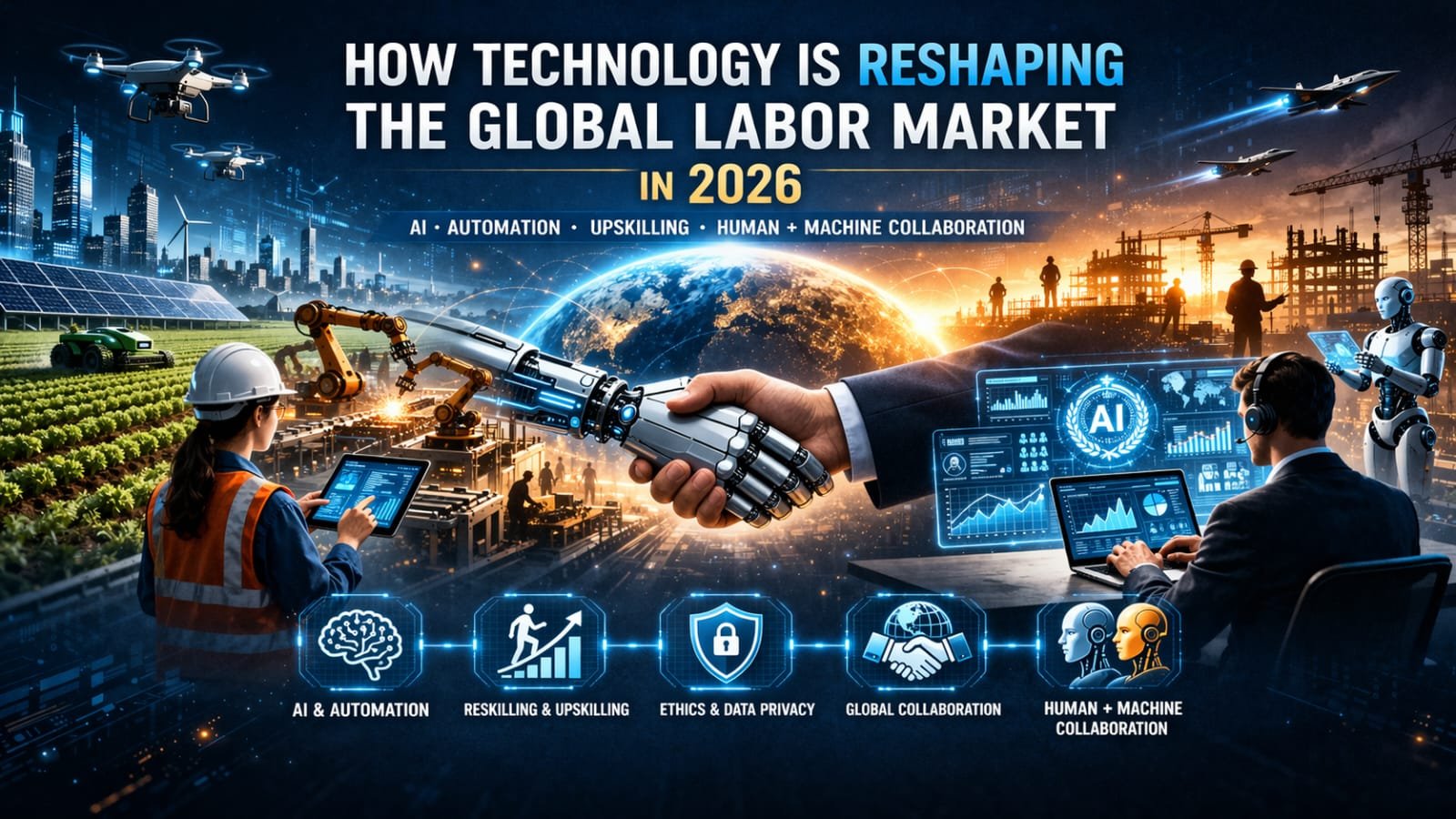
The global workforce is experiencing its most substantial changes since the beginning of contemporary history. Businesses currently use artificial intelligence and digital systems as essential operational tools. The technology now controls organizational processes and employee activities throughout the workplace.future of work 2026 The Global Labor Market Conference 2026 focused on this transformation because its attendees reached a global agreement about one fact. The current pace of change has reached its highest speed in history, and people must learn to handle these changes because they are necessary for survival.
The discussions reached their major peak when artificial intelligence became a common tool used in daily activities. Companies stopped using AI for testing purposes in separate projects. The system now runs essential business functions, which include customer service automation, hiring process optimization, and decision-making enhancement. The widespread adoption of this technology helps organizations achieve greater efficiency, but it creates employment transformations throughout multiple sectors.
How Jobs Are Evolving, Not Disappearing
The public holds a widespread belief that technology will eliminate all employment opportunities. The actual situation shows greater complexity than this. Technology changes job functions instead of eliminating them. Machines now perform most routine tasks, which enables workers to dedicate their time to important activities that require creative thinking and problem-solving skills.
Marketers currently use AI tools to analyze data, which allows them to concentrate on developing marketing strategies and creating storytelling content. Professionals in finance use automation to perform calculations and generate reports, which allows them to concentrate on analyzing data and making business decisions.
The Growing Importance of Skills and Continuous Learning
The ongoing changes in multiple industries need new skills that are becoming increasingly necessary. The practice of "learning once and working forever" is rapidly becoming obsolete. People need to acquire new knowledge throughout their lives. Professionals need to regularly update their skills because the environment in which they work changes continuously.
Governments and organizations now see reskilling and upskilling as their main priority. Training programs are being designed to help workers understand and use digital tools, data systems, and AI technologies effectively. Digital literacy has evolved into a fundamental requirement that now extends beyond technical positions. Digital literacy has become a requirement across almost all professional fields.
Challenges: Ethics, Job Displacement, and the Digital Divide
The fast advancement of technology creates various new difficulties that need to be addressed. The problem of job displacement continues to stress industries that depend on their workers to perform basic manual tasks. The process of establishing new job positions faces obstacles, even though organizations create new employment opportunities.
People worry about how technology will be used in an ethical manner. The three main issues that need to be addressed include data privacy problems, algorithm bias issues, and the need for complete system transparency. The digital divide problem exists because different areas of the world experience varying levels of access to digital technologies. The fact that certain countries lack full access to advanced technologies results in unequal opportunities, which create economic disparities throughout the world future of work 2026.
The Future of Work: Human and Machine Collaboration
The overall assessment of the situation maintains an optimistic view. The implementation of technology creates new prospects that lead to business growth and enhanced operational efficiency. The future of work will not involve human workers trying to beat machines, but instead will show them working together with machines. Successful professionals will possess the ability to merge human creative abilities with technological operational capabilities. The new era requires people to succeed through their ability to adapt and acquire new skills while using advanced technology.
Conclusion
The modern workforce now depends on technology as its essential foundation because businesses require technical systems for their operations. The Global Labor Market Conference 2026 discussions established a definite truth because the world is undergoing a rapid transformation, which leaves people no choice but to adapt.
The existing problems of job displacement, ethical issues, and restricted access create challenges for workforce development, but these elements offer a chance to establish a workforce that will stay relevant in future times. The speed at which individuals, businesses, and governments adapt to these changes will determine their success.
The path to achievement requires people to adopt a straightforward method that involves maintaining their interest in new things and advancing their knowledge while accepting transformations. People who adopt technological advancements will use them to modernize their skills and thus become future leaders in the future of work 2026.